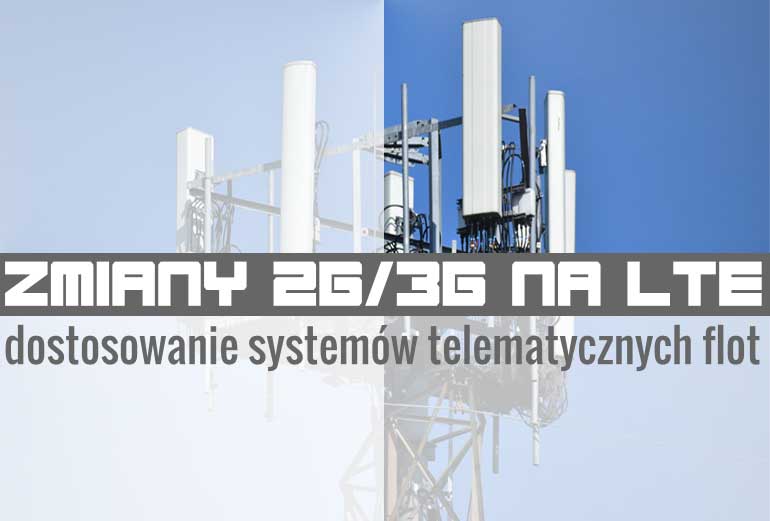
Telecommunications operators across Europe are planning to switch off 2G and 3G networks in the coming years, making way for newer technology. The phasing out of 2G and 3G networks in various countries is a result of the ongoing development of mobile communications. Older technologies are becoming increasingly unprofitable and less functional, while LTE internet offers significantly faster and more stable connections.
Continuous network improvements require the adoption of ever better solutions. The deactivation of these networks is progressing at varying rates in different countries, taking into account local needs and infrastructure.
Currently, GPS trackers based on 2G and 3G standards are still widely used, but due to changing regulations in EU countries, their support will soon be discontinued. Therefore, it is recommended to consider investing in new devices based on the 4G LTE standard, which will provide better quality and continued reliability of services.
What do 2G and 3G networks mean?
- "2G" comes from the full English name (2nd Generation), meaning the second generation. It refers to mobile telephony, transmitter networks, and the method of communication between users. 2G technology was introduced in the early 1990s.
- "3G", or third generation (3rd Generation), was introduced at the beginning of the 21st century. It was the first technology to enable video transmission and internet access, revolutionising the communications market by replacing the earlier 2G network.
What is 4G LTE?
- "4G" is an abbreviation of the English (4th Generation), the fourth generation of mobile telephony. 4G is the network within which LTE technology operates.
- "LTE" stands for Long Term Evolution, the name of the technology that enables data transmission in the 4G network.
4G is therefore a broader term than LTE, although the term 4G LTE is sometimes used.
LTE internet offers much faster and more stable connections compared to older standards such as 2G and 3G, which are based on GPRS (General Packet Radio Service – a method of packet data transmission in 2G mobile networks) and EDGE (Edge Computing – local data processing and storage). In the 2G network, the maximum download speed was only 0.2 Mb/s, while in 3G it reached up to 42 Mb/s. In contrast, LTE internet speeds are significantly higher.
When will 2G and 3G end?
Around 15 operators from 7 countries have announced the closure of 2G networks by the end of 2025.
In Poland, the largest mobile operators have already started switching them off. The timeline for the 2G switch-off is now known. Polkomtel plans to complete this process by 2027, Orange intends to switch off 3G by the end of 2025 and 2G by 2028. T-Mobile switched off 3G at the end of 2023, while 2G will be switched off at an as yet unspecified date.
Which European countries have switched off 2G networks?
Some countries have already decided to switch off 2G networks, including Switzerland, Georgia, Malta, and Ukraine. The decision to withdraw support for this network has also been made in countries such as Sweden, the United Kingdom, Germany, and Finland.
Solutions for users and businesses
Users will need to adapt to new standards by replacing outdated devices with more modern ones. For transport companies, this means the need to modernise telematics systems that use mobile connections for navigation and fleet monitoring.
The result of the 2G/3G switch-off will be the need for users to upgrade their phones to models supporting LTE technology. The withdrawal of the 2G network largely concerns telematics and tracking devices. Devices and equipment that have so far only supported 2G and 3G must now be replaced with new generation technologies.
The gradual withdrawal from 2G networks presents a significant challenge for transport companies operating international transport across Europe.
Transport companies must replace 2G/3G devices with modern ones, adapt telematics systems, and cooperate with experts in this field. It is essential to transition to 4G LTE/5G networks, which offer faster and more advanced capabilities.
Effective and well-planned implementation of new technologies is key to success in the face of rapid market changes. This enables businesses to adapt smoothly to changes and maintain their competitiveness.
GPS trackers with LTE
The main reason for switching off 2G and 3G networks is the need to free up frequencies for newer 4G LTE and 5G networks. As technology advances, old technologies become less efficient and cannot keep up with the growing demand for faster and more advanced data transfer and modern mobile services.
In response to new challenges and market requirements, trackers using modern LTE technology are being introduced. LTE trackers offer better coverage, operate in all countries, and are more reliable compared to older 2G and 3G technologies.
Additionally, 4G/LTE technology also offers faster data transfer, resulting in more dynamic and precise vehicle location.
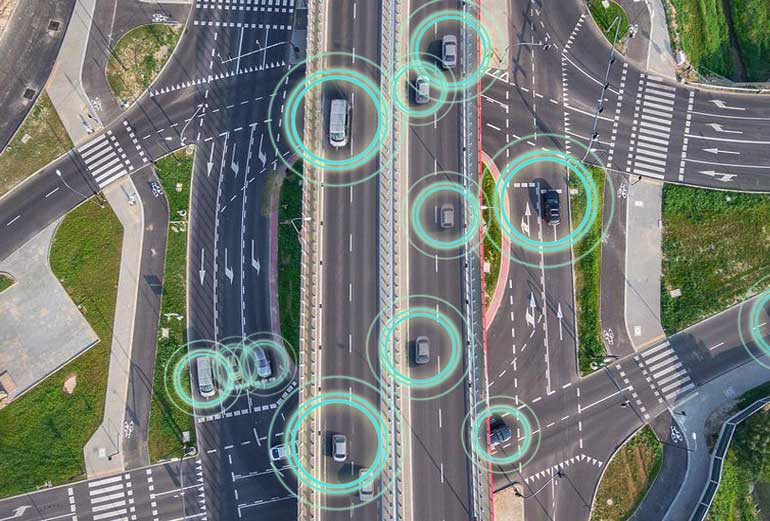
Thanks to the ability to determine vehicle positions even outside GPS coverage, GPS trackers with LTE guarantee stable operation even in difficult terrain and in places where the GPS signal may be lost. Such locations, well known to drivers, where the signal "disappears" include tunnels, garages, warehouses, or mountainous areas.
How to switch from 2G to LTE?
With the planned switch-off of 2G networks by mobile operators across Europe, the time is approaching when it will be necessary to adapt GPS trackers to the new technical data transmission requirements.
If you are unsure whether the devices in your fleet meet the standards, please contact us. You will also find information at the following link: Replacement of 2G trackers with LTE.

Summary
The change in network standards will have a significant impact on vehicle fleets. Investing in an LTE tracker enables more precise fleet management through advanced GPS devices. Major changes are coming to the tracking services sector, as next-generation networks continue to accelerate data transfer and reduce response times.
Onboard systems are increasingly being used in vehicles to perform tasks efficiently. The result is lower costs, greater connectivity options, and increased system capacity. As is well known, every improvement in communication can bring enormous benefits to a company.
This is a strategic step towards improving the efficiency and competitiveness of your business. With modern LTE trackers, you can track vehicles in real time, ensuring better route management and increased fleet control.
RECOMMENDED OTHER ARTICLES ON SIMILAR TOPICS