The article assesses the real prospects for increased profitability in the Polish TSL sector for freight transport from China in 2026. It discusses costs, operational risks, delivery times, competitive pressure, and the role of GPS tracking in reducing losses and improving fleet utilisation.
Freight transport from China has long been an important segment for TSL companies in Poland. It provides access to a large volume of cargo and enables the building of relationships with demanding clients who expect punctuality, predictability, and good communication. At the same time, this is a market where the mere availability of orders does not automatically translate into high margins.
In 2026, the profitability of international transport on the China–Poland route will depend on many factors: freight rates, fuel costs, road tolls, driver availability, downtime, and price pressure from competitors. In practice, the financial outcome will be determined not only by sales rates, but above all by the quality of work organisation, cost control, and operational efficiency.
For companies wishing to develop in the China freight segment, GPS fleet tracking is of great importance. A well-implemented system enables better management of driving time, detection of downtime, reduction of fuel consumption, and faster response to deviations from the plan. This, in turn, leads to optimisation of transport costs and improved customer service levels.
List of topics:
1. Initial situation: why freight transport from China is important for the Polish TSL sector
Freight transport from China is significant for the Polish TSL sector because it concerns a large and stable scale of international trade. Poland, as a country located in the centre of Europe, serves as an important transit corridor and distribution point for cargo destined for recipients in the European Union. This means that China–Poland transport can be a source of revenue for both road carriers and forwarding companies.
The potential of this market stems from several reasons. Firstly, clients expect fast and predictable service, which gives an opportunity to companies that can plan routes well and effectively control order execution. Secondly, international transport often involves additional requirements, such as cargo monitoring, status reporting, or flexible response to schedule changes. Thirdly, long-term business relationships with importers can provide greater stability than one-off local orders.
It must be clearly stated, however, that transport from China does not always mean high margins. This is a segment where operational costs are high and price pressure is intense. The end client often compares offers from many operators and expects the lowest possible rate while maintaining quality. As a result, TSL companies in Poland must compete not only on price, but also on punctuality, quality of information, and effective GPS fleet management.
2. What will most affect the profitability of these transports in 2026
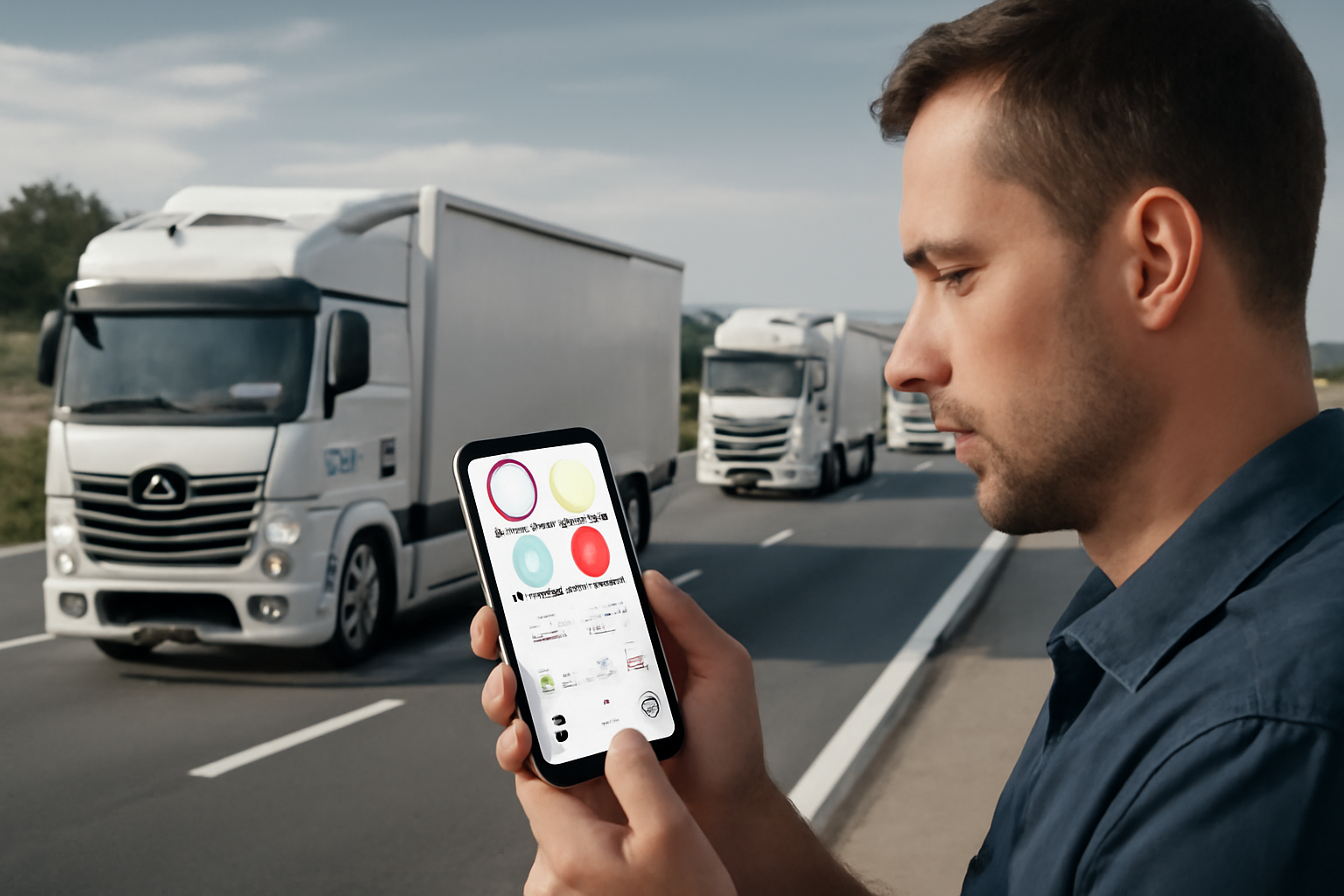
In 2026, the profitability of freight transport from China will be influenced primarily by cost and organisational factors. The most important of these are freight rates, fuel prices, road tolls, driver availability, downtime, and price pressure from the market.
Freight rates may fluctuate with demand, seasonality, and the situation on main transport corridors. If the market is highly competitive, carriers often accept lower margins to maintain a steady flow of orders. This seemingly improves fleet utilisation, but with poor calculation can lead to operating at the edge of profitability.
Fuel costs remain one of the key components of transport pricing. Even minor deviations in fuel consumption, resulting from uneconomical driving, unnecessary detours, or long stops with the engine running, can reduce financial results. Added to this are road tolls and the costs of transiting through successive countries, which in international transport constitute a significant part of the total service cost.
Driver availability will also be a major issue. A lack of sufficient experienced staff limits the ability to carry out more trips and increases organisational costs. If a company has poor shift organisation, too few drivers, or excessively long downtime between orders, the profitability of international transport quickly declines.
Price pressure cannot be ignored either. In the China transport segment, competition is fierce, and many clients negotiate terms very aggressively. Therefore, in 2026, profit will not depend solely on how many orders a company acquires, but on whether it can execute them with full control of transport costs and without unnecessary operational losses.
3. Main risks in freight transport from China to Poland
Freight transport from China to Poland involves operational risk, which directly translates into costs. One of the most common problems is delays. These may result from traffic jams, border controls, unplanned stops, vehicle breakdowns, bad weather, or errors on the part of the sender or recipient. Every delay affects delivery punctuality, which can mean contractual penalties, loss of client trust, or the need to organise more expensive remedial actions.
Another risk is transhipment and related damages. The more points of contact with the cargo, the greater the chance of damage, documentation errors, or incorrect assignment of a shipment to the wrong transport. In practice, this means additional costs for claims, insurance, and after-sales service.
Planning errors are also a significant threat. If the route is poorly planned and travel time underestimated, the company may not only risk being late, but also incur additional costs for overnight stays, stops, or inefficient vehicle use. In the case of long-distance international transport, even minor deviations from the plan can trigger a chain of losses.
Attention should also be paid to losses resulting from lack of route control. If the dispatcher does not know exactly where the vehicle is, they cannot quickly respond to deviations, unplanned stops, or changes in transport status. Lack of up-to-date information increases the risk that a problem will be noticed too late. Then, instead of managing the situation in real time, the company can only limit the consequences of the error.
This is precisely why freight transport from China requires not only good logistics, but also tools for continuous monitoring of order execution. Without them, profits in the TSL sector can be eroded by hidden costs that are not visible in the freight rate itself.
4. Can Polish TSL companies increase their margin despite competition
Polish TSL companies can increase their margin on transport from China, but not simply by changing their price list. Operational measures are needed to improve efficiency and reduce losses. The most important of these are better route planning, reduction of empty runs, improved client communication, and faster response to deviations.
Better route planning means choosing a route that takes into account travel time, road toll costs, availability of loading and unloading points, and restrictions related to driver working hours. In a well-organised company, planning does not end with setting the direction of travel. It also includes risk control, anticipating downtime, and planning time buffers.
Reducing empty runs is very important for the profitability of international transport. If a vehicle returns empty, the cost of the return journey must be covered by the previous order or by the next, appropriately calculated route. Companies that can combine orders more smoothly usually achieve better results than carriers operating randomly.
Communication with the client is also of great importance. In transport from China, recipients expect predictability. If a company can inform in advance about a delay, status change, or alternative delivery date, it is easier to maintain trust and avoid conflicts. This is also important for sales, as clients are more likely to return to a carrier who not only delivers the cargo, but also manages information effectively.
Quick response to deviations is another element in improving margins. If the dispatcher sees a problem immediately, they can change the route, contact the driver, inform the client, or adjust the plan for the remainder of the transport. In practice, a few minutes of quick reaction can save many hours of downtime and significantly reduce losses.
5. The role of GPS tracking in cost and punctuality control
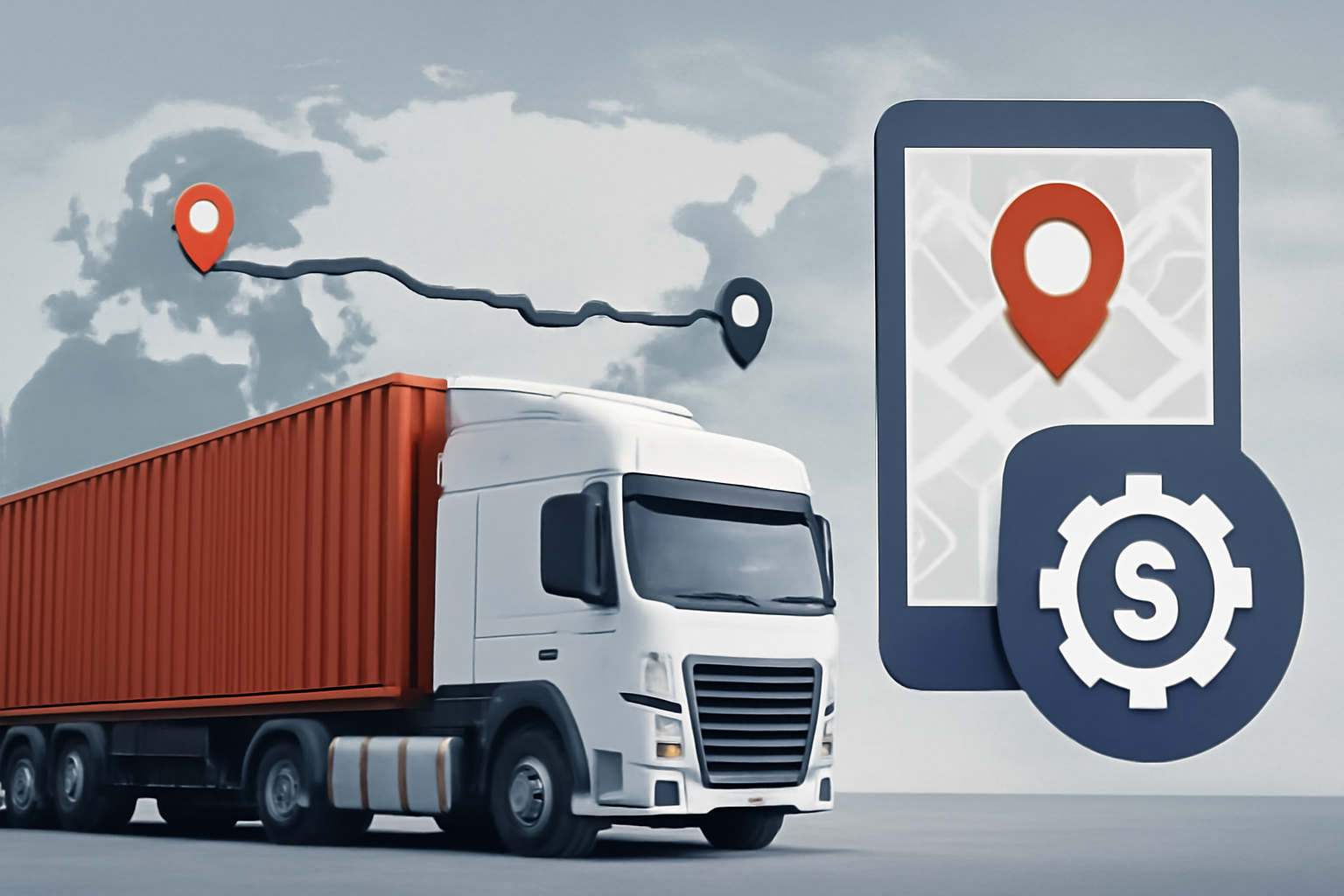
GPS fleet tracking has a direct impact on cost control and punctuality in international transport. A well-implemented system allows you to track vehicle position, analyse travel time, detect stops, and assess compliance with the plan. For a company operating in the China–Poland transport segment, this is an operational tool, not just a technical one.
One of the main areas of benefit is reducing fuel consumption. If the system shows unusual stops, inefficient driving, or deviation from the planned route, the company can quickly check the reason. This helps to detect situations where fuel is consumed without business justification, for example during long stops with the engine running or unnecessary detours.
GPS tracking also allows detection of downtime. In long-distance transport, stops are natural, but they must be controlled. If a vehicle is stationary longer than planned, the dispatcher can immediately determine the reason and assess the impact on delivery time. This makes it easier to maintain control over the entire route execution.
It is also very important to monitor plan execution. In transport from China, a delay in one stage can disrupt subsequent stages of service. GPS helps maintain operational order by providing a real-time overview of the situation. This facilitates GPS fleet management, especially when a company operates multiple vehicles and serves several clients simultaneously.
As a result, GPS tracking supports the optimisation of transport costs in a practical way. It does not automatically reduce all expenses, but helps to control them better, identify problems earlier, and limit losses that in international transport are often invisible in day-to-day operations.
6. How GPS tracking supports customer service in transport from China
In transport from China, simply carrying out the transport is no longer enough. Business clients expect real-time information, not just final delivery confirmation. That is why GPS tracking supports not only cost control, but also customer service and the sale of TSL services.
Vehicle location enables quick responses to questions about transport status. If a client asks where their cargo is, the company employee does not have to rely on assumptions. They can check the vehicle's position and provide specific information. This builds credibility and reduces the number of calls requiring manual clarification of the situation.
Reports from the GPS system also help in communication after order completion. The company can analyse travel time, stops, and compliance with the plan, and then draw conclusions for the future. This way of working increases predictability, which is particularly important for long routes and high-value cargo.
Transport status also has commercial significance. When a client sees that the carrier has an organised information process and controls the route well, it is easier to build long-term cooperation. In practice, the advantage does not stem solely from a lower price. Increasingly, the deciding factor is the ability to provide stable, transparent service.
For many TSL companies, GPS tracking is therefore becoming part of the offer. It is not just about the device itself, but about the entire information management process: vehicle location, route data, response to deviations, and reporting. These are the elements that strengthen a company's position in the international transport profitability segment.
7. What actions should TSL companies implement before 2026
If a TSL company wants to improve its results in freight transport from China in 2026, it should prepare in advance. The best place to start is with a fleet audit, route analysis, GPS system implementation, dispatcher training, and streamlining cost reporting.
A fleet audit allows assessment of which vehicles generate the highest costs, where breakdowns occur, what the average fuel consumption is, and which aspects of driver work need improvement. This gives management data, not just general impressions.
Route analysis shows which directions are profitable and which generate excessive costs for too low a rate. It is worth comparing not only the revenue from an order, but also travel time, number of stops, empty runs, and indirect costs. This allows a better assessment of where profit in the TSL sector actually arises.
Implementation of a GPS system should be treated as an operational decision. Simply purchasing devices is not enough. Procedures are needed: who monitors vehicles, how often deviations are checked, how delays are reported, and what the response thresholds are. Without this, even the best tool will not deliver full benefit.
Dispatcher training is as important as technology. The person responsible for supervision must be able to read data, interpret delays, and respond appropriately. In practice, it is the dispatcher who connects GPS fleet tracking with day-to-day transport management.
Finally, cost reporting must be streamlined. If a company does not know exactly how much a given type of transport costs, it will not be able to assess whether the rate is profitable. In 2026, those companies that can calculate not only revenue, but also the full cost of China–Poland transport execution, will have the advantage.
8. Conclusions: does the TSL sector in Poland have a chance for higher profits from transport from China
The TSL sector in Poland has a chance to increase profits from freight transport from China in 2026, but this will not be an easy or automatic growth. The market potential exists because transport from China remains an important and relatively large segment of international transport. The problem is that the mere availability of cargo does not guarantee high margins.
The financial outcome will be determined primarily by operational discipline, cost control, good work organisation, and effective fleet management. Companies that reduce downtime, minimise empty runs, plan routes better, and respond more quickly to problems have a real chance to improve the profitability of international transport.
In this process, GPS tracking plays a very practical role. It helps to reduce losses, increase transparency of vehicle operations, improve punctuality, and strengthen customer service. For companies operating in the TSL Poland 2026 segment, it is a tool that can determine whether freight transport from China will be merely a source of high turnover or also of real profit.
Summary
In 2026, freight transport from China may be a source of revenue growth for the Polish TSL sector, but it does not guarantee high margins. Profitability is influenced by fuel costs, road tolls, driver availability, downtime, and price pressure. Companies wishing to increase profits must plan routes better, reduce empty runs, respond more quickly to deviations, and control costs in real time. GPS fleet tracking supports these activities by improving punctuality control, reducing operational losses, and strengthening customer service.
If your company handles China–Poland transport or plans to enter this segment, check whether you have the tools to control routes, downtime, and costs. GPS tracking can help not only with fleet supervision, but also with improving the profitability of international transport and the quality of customer service.