Driver cards from abroad are a topic that frequently arises in transport and forwarding companies. In practice, it concerns not only the compliance of documents themselves, but also route monitoring, working time, data downloads, and reducing the risk of operational errors. This article aims to explain how to approach the subject from both a formal and organisational perspective, and how GPS tracking helps to better manage the fleet, drivers, and settlements.
In international transport, the driver card and tachograph data are among the primary sources of information about the operation of the vehicle and the driver. When drivers from different countries are involved, additional challenges arise: varying internal procedures, communication barriers, delays in data downloads, and sometimes inconsistent approaches to documentation. For a transport company, this means the need for better work organisation, constant data control, and clear verification rules. In practice, GPS fleet tracking is very helpful here, as it supplements tachograph data and provides the dispatcher and company owner with a more complete picture of order execution.
List of topics:
1. What are driver cards from abroad and when does the topic arise in a transport company
In practice, the term driver cards from abroad refers to situations where a transport company employs or serves drivers holding driver cards issued in countries other than the carrier's registered office, or operates in an international model where more than one system of work and activity documentation is present. The issue is not limited to the document itself. It is primarily about how the company collects, reads, and uses tachograph data, and how it links this with the transport plan, driver settlements, and monitoring the execution of journeys.
The topic most often arises when a carrier has a fleet operating across Europe, works with drivers recruited from various countries, or uses subcontractors. In such cases, data may reach the company at different speeds, in various formats, and via different channels. For the transport department, this means the need to maintain order in documents and constant control to ensure that what the tachograph shows matches the actual course of the assignment. At this point, GPS fleet tracking becomes a very practical support, as it allows data from documents to be compared with the real route taken.
2. What are the carrier's obligations when working with drivers from different countries
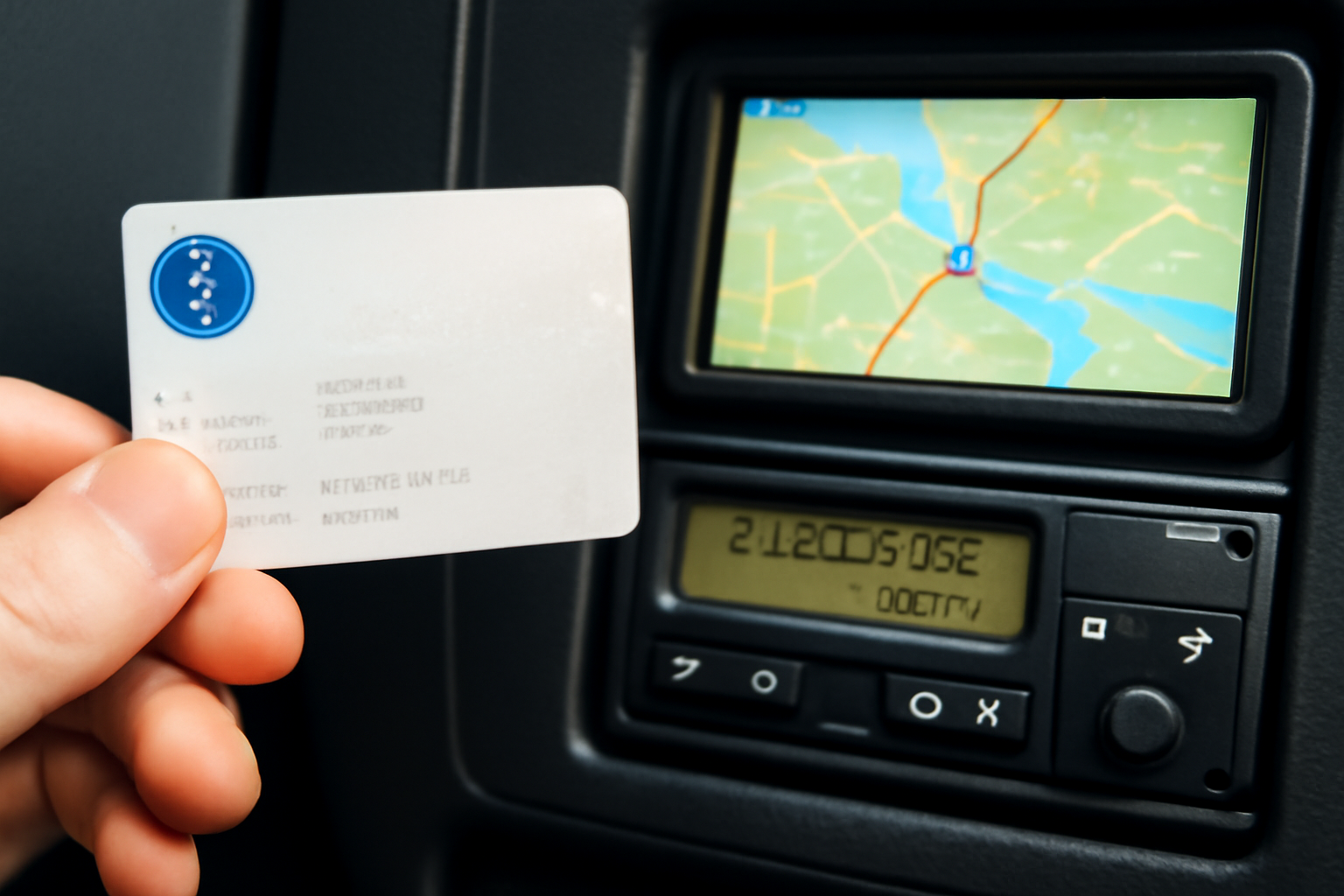
The carrier should have an organised process for handling drivers, regardless of their country of origin. In practice, this means several basic organisational duties. Firstly, the company must know which documents are required for a given cooperation model and who is responsible for their completeness. Secondly, rules for downloading and archiving data from the tachograph and driver cards must be established. Thirdly, ongoing control of drivers' working time, routes, and compliance of performed transport with the plan is necessary.
This is not about creating excessive bureaucracy, but about a simple and repeatable process. If a driver works in international transport, the dispatcher should have access to information about where the vehicle has been, how long it stood still, whether the journey was completed as planned, and whether tachograph data is being downloaded regularly. In a transport company, responsibility for communication is also very important. If the driver does not understand the procedure, data may be delivered late or incomplete. That is why many companies combine document control with GPS tracking and simple reports that show the course of work without the need to manually check each route.
3. The most common problems with driver cards from abroad
The biggest problems in practice usually do not result from a single major error, but from many minor inconsistencies. The first problem is a lack of data consistency. The tachograph shows one thing, the dispatcher has a second record, and the driver provides a third version of events. With a larger fleet, such discrepancies quickly turn into chaos.
The second problem is errors in readings and delays in data downloads. If the company does not have a fixed schedule for downloading data from driver cards and the tachograph, some information may be lost or difficult to reconstruct. This, in turn, makes it harder to settle drivers, analyse routes, and prepare documentation for clients.
The third area of risk is communication. In international transport, drivers often work continuously, and information is passed on by phone or via messaging apps. When there is no clear standard, misunderstandings are easy. The fourth problem is settlements. If the route was completed differently than planned, the company may have difficulty explaining differences in working time, stops, or fuel consumption. This is precisely why GPS tracking in a transport company helps reduce the number of disputes and resolve inconsistencies more quickly.
4. What data should be monitored daily
On a daily basis, it is worth monitoring several areas that together provide a complete picture of the driver's and vehicle's work. The most important of these are:
route taken and compliance with the plan, stops and their duration, driver's working time and activity periods, vehicle mileage, deviations from the designated route, tachograph data and timeliness of downloads, speed and driving style if the company uses such analysis, completion of loading and unloading points.
In practice, the dispatcher should see whether the vehicle is following the assignment, where it stopped for a break, and whether downtimes affect delivery punctuality. For the company owner, information about mileage and fuel consumption is also important, as these help assess the profitability of journeys. If tachograph data can be combined with GPS, it is easier to check whether working time and actual vehicle movement are consistent. This is very important when settling drivers and analysing fleet costs.
5. GPS tracking as support in monitoring drivers' work
GPS tracking in a transport company does not replace the tachograph or the obligations related to documentation. However, it is a very good tool for supporting daily control. It provides a quick overview of where the vehicle is, how long it has been stationary, whether the journey is proceeding according to plan, and whether the driver arrived at the loading or unloading point at the correct time.
In practice, this means fewer phone calls to the driver, less guesswork, and less manual checking. The dispatcher can immediately see deviations from the plan and react before the problem results in a delay for the client. In international transport, this is particularly important, as every hour of delay can mean additional costs and the risk of losing an order.
GPS fleet tracking also helps verify compliance of the journey with the assignment. If the vehicle deviated from the route, stopped outside the planned location, or waited longer than expected for unloading, this can be quickly checked and documented. For a transport company, this is a practical fleet management tool, not just a vehicle location system.
6. How GPS helps reduce errors and abuses
Well-implemented GPS tracking reduces operational errors and minimises the risk of misunderstandings. Firstly, it allows deviations from the route to be detected more quickly. If the vehicle turned in a different direction than planned, the dispatcher sees this immediately and can contact the driver. Secondly, GPS makes it easier to monitor stops. It is visible where the vehicle was stationary, how long the stop lasted, and whether it was organisationally justified.
Thirdly, the system helps monitor fuel. Combined with mileage and driving style data, it is easier to assess where differences in fuel consumption come from. This is important when settling drivers, controlling costs, and detecting irregularities. Fourthly, GPS reduces the number of disputes with clients and within the company. When the question arises whether the vehicle was on site on time, the location record can be quickly checked and specific information provided.
For transport companies, this translates into more transparent driver settlements and better fleet work control. Instead of relying solely on declarations, the company uses data that can be compared with the tachograph, assignment, and GPS system report.
7. How to implement a simple control process in a transport company
The best process is one that can be applied daily without overburdening the team. In practice, it is worth starting by dividing responsibilities. Someone in the company should be responsible for downloading data from the tachograph, someone for route control, and someone for archiving reports. In a small company, this may be one person; in a larger one, a team of dispatchers and the settlements department.
A good solution is to set a fixed frequency for checks. For example, GPS location data can be checked several times a day for time-sensitive journeys, and route reports analysed after the assignment is completed. Tachograph data should be downloaded according to an internal schedule to avoid gaps in documentation.
It is also worth setting up simple reports: route report, stop report, mileage report, and deviation from plan report. Such a set makes it easier to settle drivers and provides a basis for discussions with the client if something did not go according to plan. A good practice is also to archive loading and unloading confirmations and correspondence related to the journey. This way, in the event of a dispute, the company has all the information in one place.
8. When is it worth combining GPS tracking with tachograph handling and reporting
Combining GPS tracking with tachograph handling and reporting makes the most sense when a company wants fuller control over the fleet and to reduce manual activities. This is particularly useful for enterprises that handle international transport, have many drivers, or settle assignments based on time, route, and punctuality.
Integration of tools brings one important benefit: less data needs to be checked separately. The dispatcher sees the vehicle's location, the settlements department has access to working time information, and the owner can analyse fleet results based on reports. This improves fleet management transparency and shortens the time needed to resolve inconsistencies.
In practice, it is worth considering such integration when the company has problems with data timeliness, too many phone calls to drivers, difficulties in settling stops, or frequent disputes about the route. In such situations, GPS fleet tracking together with reporting provides very concrete organisational support and helps to organise the daily work of the transport department.
9. Summary: why better data control means less risk in transport
Driver cards from abroad are a topic that requires not only knowledge of documents, but above all a good data control process. In a transport company, order in documentation, regular data downloads, consistency between the tachograph, GPS, and transport plan, and quick response to deviations are crucial. The better the company organises this area, the lower the risk of errors, disputes, and costly downtimes.
GPS tracking is a very practical tool in this context. It helps monitor routes, stops, drivers' working time, and compliance of journeys with the assignment. It also facilitates driver settlements and fleet cost analysis. For many transport companies, it is not an add-on, but real support for daily management. If the goal is greater control, less chaos, and better work organisation, it is worth combining tachograph data with GPS tracking and simple reporting.
Summary
In international transport, handling driver cards from abroad requires order in documents, regular data control, and clear procedures. The greatest risks concern information inconsistencies, delays in readings, communication problems, and difficulties in settlements. GPS fleet tracking helps to reduce these problems, as it provides quick insight into the route, stops, working time, and order execution. Well integrated with the tachograph and reporting, it becomes a practical tool for fleet management, driver control, and reducing operational risk.
If you want to better monitor drivers' work, organise tachograph data, and react more quickly to route deviations, consider implementing GPS tracking with reporting for your fleet. It is a simple step that makes the daily work of a transport company easier and improves the quality of settlements.