
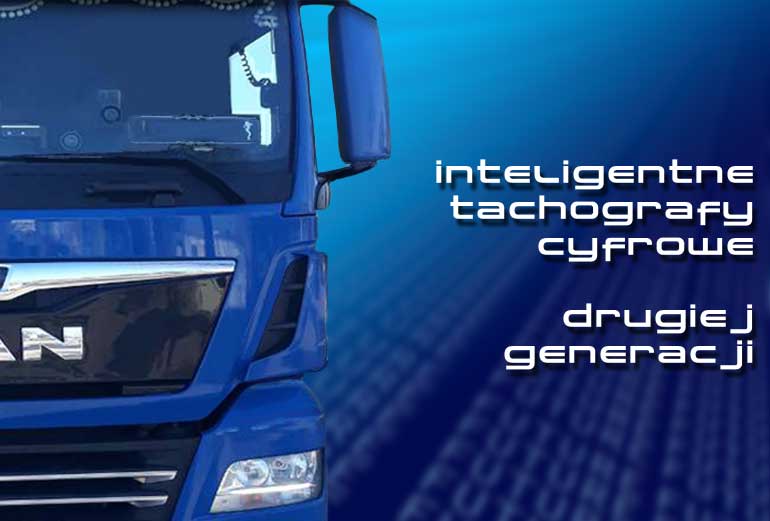
The year 2026 brings one of the biggest changes in the transport industry in years. For the first time, the obligation to use tachographs will apply not only to lorries but also to vans with a permissible gross weight over 2.5 tonnes and up to 3.5 tonnes.
For many companies, this means the end of more relaxed rules and the need to comply with regulations previously associated mainly with heavy transport. Find out exactly what is changing and how to prepare your company.
List of topics:
From when is a tachograph mandatory in a van?
The key date is 1 July 2026. From this point, a tachograph will be mandatory in vans used for:
- international commercial road transport of goods
- cabotage operations
The new regulations stem from the so-called Mobility Package and cover vehicles with a GVW over 2.5 tonnes and up to 3.5 tonnes.
In practice, this means that if your company carries out transport outside Poland, you will most likely need to have a tachograph. If you operate only locally, the obligation may not apply to you.
Who is exempt from the new regulations?
Not every van will be required to have a tachograph. There are several important exceptions. The obligation does not apply, among others, to:
- domestic transport carried out exclusively within a single country
- certain own-account transport, provided it is not commercial in nature
- vehicles used privately, e.g. camper vans
However, caution is advised. Misinterpreting own-account transport can result in heavy fines during inspections.
What type of tachographs will be required?
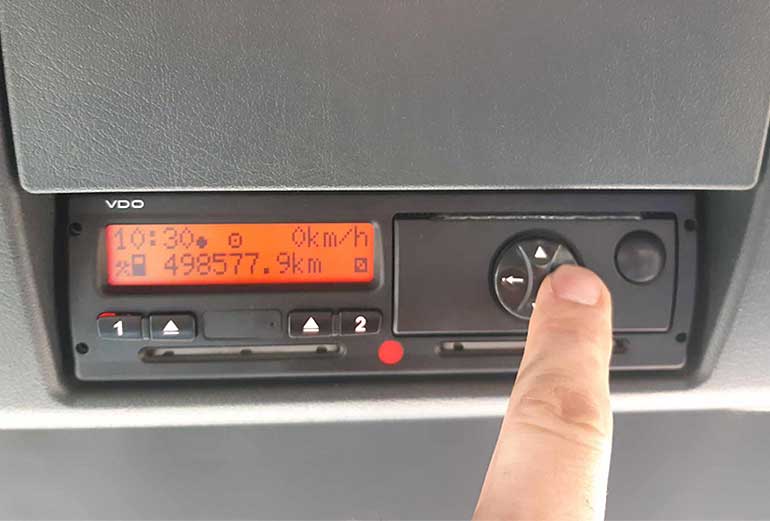
From 2026, vans will need to be fitted with so-called second-generation smart tachographs (G2V2). These are no longer just simple devices for recording working time. Modern tachographs:
- automatically record border crossings
- store vehicle location data
- enable remote inspection by authorities
- support the enforcement of cabotage regulations
Their introduction is intended to limit abuses and increase transparency in transport across the European Union.
What changes for van drivers?
The biggest change is that van drivers covered by the regulations will be subject to driving and rest time rules similar to those for lorry drivers. This means, among other things:
- a maximum of 4.5 hours of driving without a break
- a mandatory break of at least 45 minutes
- daily and weekly working time limits
This marks the end of a situation where vans could carry out international transport virtually without working time checks.
What changes for transport companies?
For business owners, the changes are even greater than for drivers.
Implementation costs
Installing a tachograph costs around 3000–5500 PLN per device including installation. Additionally, you need to account for the driver card and system operation.
New administrative duties
Companies must:- archive tachograph data
- calculate drivers' working time
- prepare for inspections by the ITD and foreign authorities
The end of the grey area
Until now, many companies used vans to bypass some transport restrictions. From 2026, such practices will become much more difficult.
Tachograph and GPS vehicle tracking – why is it worth combining both systems?
The introduction of tachographs does not mean that GPS vehicle tracking is no longer needed. Quite the opposite. The best results come from combining both technologies.
The tachograph is responsible for:
- compliance with regulations
- recording working time
GPS vehicle tracking provides:
- real-time vehicle monitoring
- fuel and driving style control
- route optimisation
- reports for the company
Only by combining these two systems do you gain full control over your fleet.
How to prepare your company for 2026?
If you use vans for international transport, it is not worth waiting until the last minute. The best steps are:
- Fleet audit – check which vehicles are subject to the obligation
- Plan tachograph installation
- Driver training
- Implement a data analysis system, e.g. GPS and telematics
The sooner you start, the lower the risk of chaos and penalties.
Summary
2026 is a turning point for light transport in Europe. The key takeaways:
- tachographs will be mandatory in vans from 1 July 2026
- the regulations mainly cover commercial international transport and cabotage
- van drivers will be accounted for in a similar way to lorry drivers
- companies must prepare for new obligations and costs
For many businesses, this will be a major change, but also an opportunity to streamline processes and increase fleet efficiency.
MORE INFORMATION
European Commission – Tachograph
RECOMMENDED OTHER ARTICLES ON SIMILAR TOPICS
Smart tachographs – replacement