
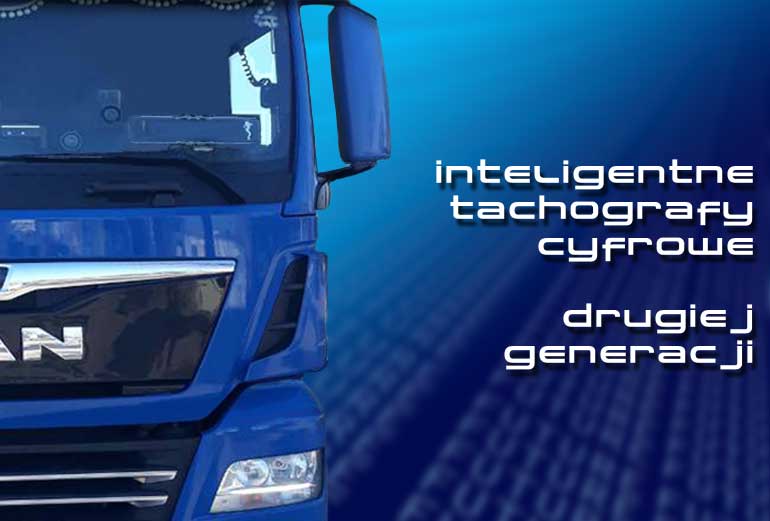
In order to regulate and improve the functioning of the road transport sector, a requirement has been introduced to replace first-generation (G1) analogue and digital tachographs. These changes arise from the provisions of the gradually implemented EU Mobility Package.
Therefore, the necessary replacement of devices with second-generation (G2) smart tachographs for international transport has commenced.
It is important to remember the replacement deadlines. European regulations do not require the replacement of tachographs that will be used exclusively for domestic transport.
What is a tachograph and how does it work
A tachograph is a device used in vehicles, especially in road transport, designed to record and monitor the driver's working time (driving and rest), as well as speed and distance travelled.
The tachograph was created to record all changes made by the driver. It is a device that can provide a wealth of various, important information. Its purpose is to ensure that drivers comply with regulations while driving and to enhance road safety.
In the context of tachographs used in road transport, three main types of tachographs can be distinguished:
Analogue
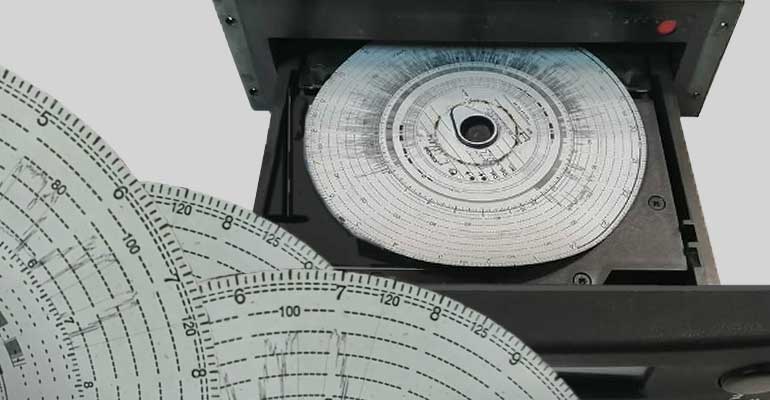
This is the traditional tachograph, which operates mechanically. Data on the driver's working time, breaks, and speed are recorded on paper discs. The device records operational parameters on charts, i.e., paper discs, using a stylus. Manual reading and analysis of the data by authorised inspectors is required.
Until what year are chart discs allowed
Carriers have until 31 December 2024. Subsequently, by 19 August 2025, all tachographs in vehicles used for international transport must be replaced.
Digital Tachograph G1
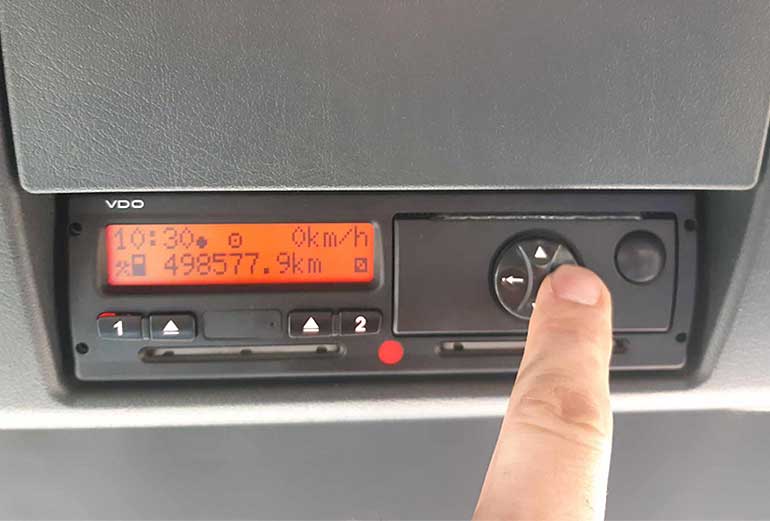
Introduced to replace the analogue tachograph. Data is recorded electronically on special driver cards. It offers more precise measurement functions than the analogue tachograph. It allows data storage on the driver card as well as on the device itself (the so-called VU - Vehicle Unit).
Second-Generation Smart Tachograph G2
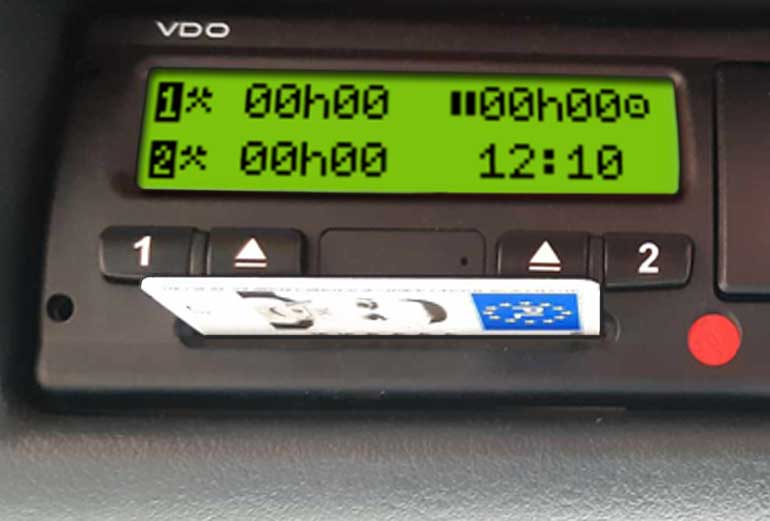
This represents the most advanced generation of tachographs. Equipped with advanced technologies such as GNSS (Global Navigation Satellite System) navigation, DSRC (Dedicated Short-Range Communication), etc. It can be remotely read in real time by control authorities, which facilitates and improves the effectiveness of compliance monitoring. It features larger memory, automatic software updates, greater resistance to tampering, and new enhanced functions.
What are smart tachographs
Second-generation smart tachographs are a more advanced form of digital tachographs. They have been equipped with a range of new features and capabilities.
- Automatic registration of border crossings within the European Union using GNSS location. This eliminates the previous requirement to stop the vehicle immediately after crossing the border at the nearest safe place to enter data.
- Extension of the range of data available for remote real-time monitoring of drivers' working time via short-range communication (DSRC). More remote monitoring parameters – RTM (from 19 to 25 functions) displayed by smart tachographs. These functions include: Time of reading the last authenticated vehicle position, then uninterrupted driving time. Another is the recorded longest daily driving time for the current and previous RTM shift. The longest daily, weekly, and bi-weekly driving times are also recorded.
This technology allows remote reading of key parameters from smart tachographs in lorries without the need to download data from on-board cards.
- New tachographs allow drivers to enter information regarding registration of loading and unloading of goods.
- Larger memory enabling data storage for 56 days (previously 28 days). The extension of the control period will take effect at the end of 2024. Card memory increased by 85%.
- Software update capability, allowing adaptation to regulatory changes, ITS (Intelligent Transport Systems interface) with Bluetooth protocol, facilitating efficient communication with external transport systems, mobile applications, and on-board computers.
- Greater resistance to attempts at tampering with the tachograph and data. Ability to detect attempts to breach security, e.g., use of magnets, switches, or incorrect operation of motion sensors.
Thanks to satellite systems, smart tachographs automatically collect vehicle location data, which increases the effectiveness of roadside inspections and makes it easier to detect violations of drivers' working time regulations.
Regulations
The new tachographs have been implemented in all European Union countries to regulate operations in the road transport sector. These measures aim to standardise practices and improve control in the transport industry.
According to the amendment of Regulation (EU) No 165/2014, from 21 August 2023, the second generation of digital tachographs (G2V2) is mandatory in the European Union, as well as in Switzerland, the United Kingdom, and Norway.
The implementation of new regulations in Poland regarding the installation of new devices has been divided into several stages.
Who and when will have to replace their tachograph
The obligation to install second-generation (G2V2) smart tachographs in newly registered lorries came into force on 21 August 2023.
The next device replacement deadlines are known. It is worth remembering them and taking appropriate steps now to ensure timely installation.
- 31.12.2024
Deadline for completing the first stage of installing new tachographs. This obligation covers the replacement of all analogue and older type digital tachographs – G1 (installed in new vehicles until mid-June 2019) used in international transport with second-generation smart tachographs (so-called retrofit). - 20.08.2025
Date by which first-generation smart tachographs (G2V1) must be replaced with second-generation (G2V2) tachographs in international transport. - 01.07.2026
From this date, the obligation to have second-generation smart tachographs in van transport will apply. This will cover vehicles with a GVW from 2.5 tonnes operating exclusively in international transport.
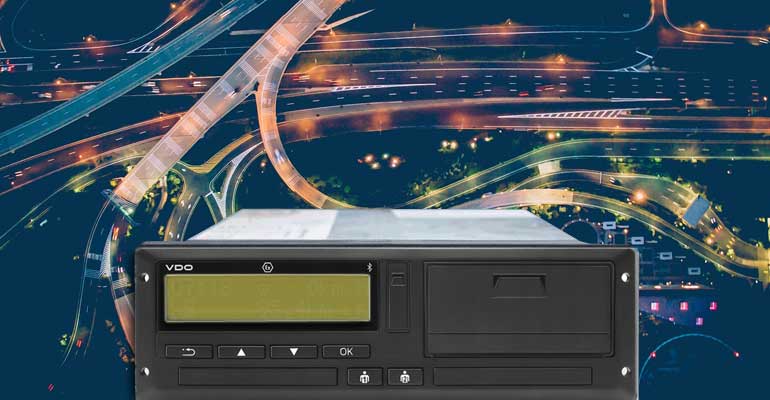
The Chief Inspectorate of Road Transport (Główny Inspektorat Transportu Drogowego) has issued a statement reminding of the necessary changes regarding tachograph replacement. The regulatory change will take effect on 31 December 2024. By this date, second-generation smart tachographs, known as “Smart Tacho 2”, must be installed in those lorries whose first registration date was before 15 June 2019.
GITD Statement:
We remind you that by the end of 2024, vehicles used in international road transport must be equipped with second-generation smart tachographs (so-called retrofit). Failure to replace will prevent further provision of international road transport services, and non-compliance with this obligation will result in a financial penalty: PLN 10,000 for the transport company and PLN 2,000 for the person managing transport. To avoid the risk associated with postponing the replacement of the tachograph with a second-generation smart device until the end of the year, we recommend replacing the equipment without unnecessary delay. At the same time, we inform you that such replacement is not necessary only if the vehicle will be used for domestic transport or international transport without crossing the borders of other Member States (e.g., Poland – Ukraine).
source: Chief Inspectorate of Road Transport (Główny Inspektorat Transportu Drogowego)
Consequences of failing to replace tachographs
Failure to replace will prevent further provision of international road transport services, and non-compliance with this obligation in Poland will result in a financial penalty: PLN 10,000 for the transport company and PLN 2,000 for the person managing transport, as also highlighted by the GITD. Abroad, penalties may be much higher, and the cost of replacing the tachograph after an inspection in another country may also be significantly greater.
Smart tachograph price
Due to the advanced technology used in second-generation smart tachographs, the new requirements mean that carriers must physically replace existing tachographs. This is not limited to updating existing devices; a complete replacement is required.
For carriers, this means not only the costly operation of replacement, but also the need to incur expenses related to the purchase of new tachographs. This process already involves significant costs, estimated at around four thousand PLN. The amount will likely increase with the introduction of new tachograph models to the market. The replacement price may depend on the choice of a specific lorry or tachograph model.
The process of replacing a tachograph can take several hours. For this reason, it is worth carefully considering which fleet vehicles will operate on international routes. Well-planned tachograph replacement, especially throughout 2024, will help avoid unexpected complications when the new regulations come into force in August 2025.
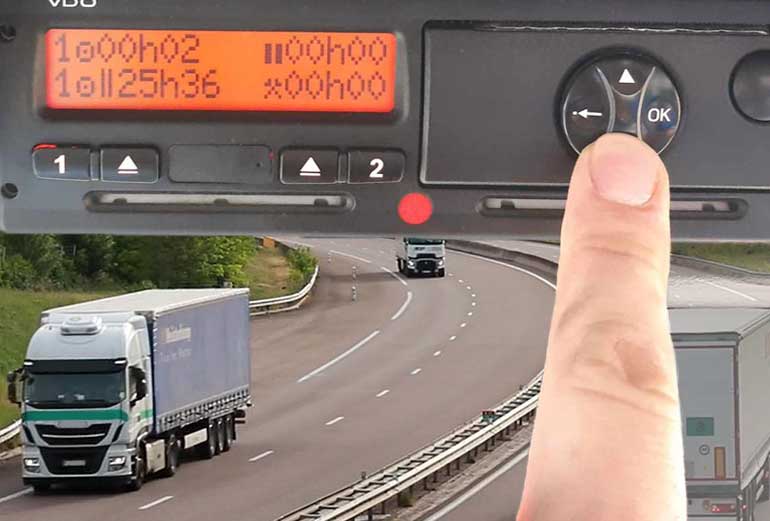
The new generation of tachographs introduces many innovative features. This is a response to the dynamic development of the market and new technologies. The new GPS tachographs have been introduced not only to facilitate the work of authorised persons carrying out roadside inspections, but also with the benefits for law-abiding drivers in mind.
It is worth noting that employees who conscientiously comply with the regulations will no longer be subject to routine inspections. As a result, they will avoid unnecessary stops on the roads and stressful procedures. The new tachographs are therefore intended not only to increase the efficiency of inspection activities, but also to improve comfort and driving flow for honest drivers by eliminating unnecessary downtime.
An important element in the introduction of new tachographs is the improvement of road transport efficiency, increased safety, and adaptation to current industry regulations. Regulatory updates are following technological evolution, heading towards a new chapter of common principles.
MORE INFORMATION
ACT of 5 July 2018 on tachographs (USTAWA z dnia 5 lipca 2018 r. o tachografach) Journal of Laws 2018 item 1480 ACT of 5 July 2018 on tachographs (Dz.U. 2018 poz. 1480 USTAWA z dnia 5 lipca 2018 r.o tachografach)
RECOMMENDED OTHER ARTICLES ON SIMILAR TOPICS