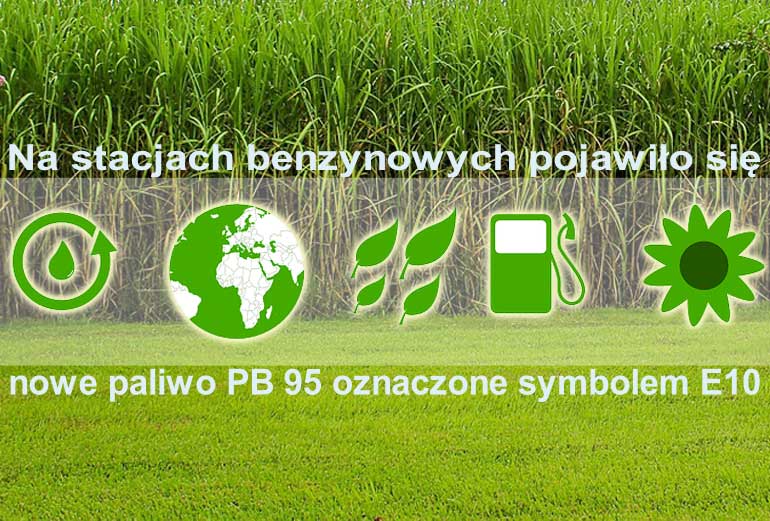
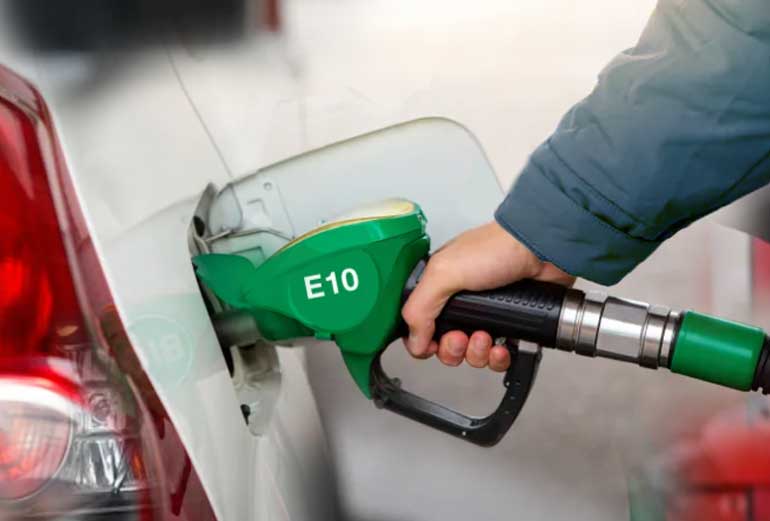
A new PB 95 fuel marked with the symbol E10 has appeared at petrol stations, replacing the well-known 95-octane petrol (E5) from January 2024.
The aim of its introduction is to minimise the negative impact on the environment by reducing emissions of harmful substances, while emphasising the role of alternative energy sources.
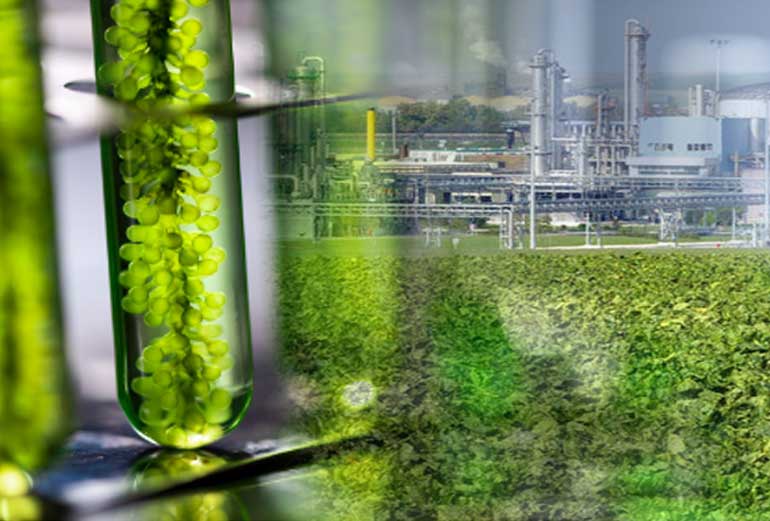
Ethanol, mainly derived from corn or sugar cane, is a biofuel, which means it is produced from renewable plant sources.
What is the difference between E5 and E10 fuel
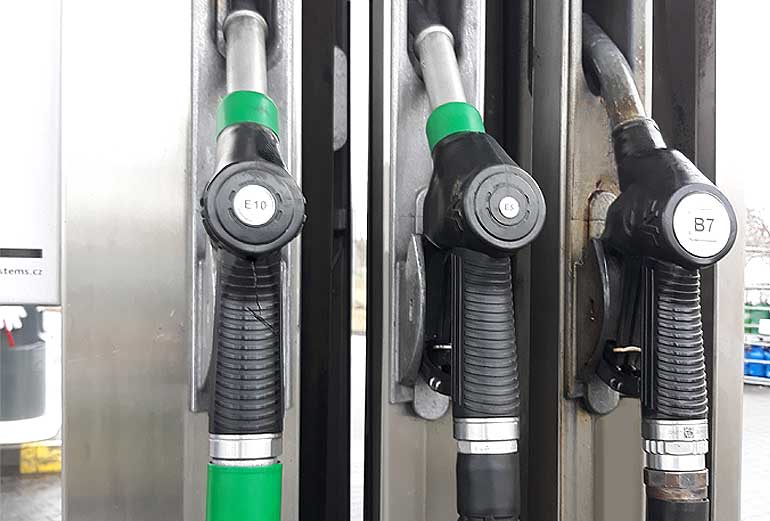
The designations "E5" and "E10" indicate the percentage of ethanol contained in a given type of petrol. Ethanol is a biodegradable substance, and its combustion can help reduce carbon dioxide emissions.
E5 petrol: Contains up to 5% ethanol.
E10 petrol: Contains up to 10% ethanol.
The percentages given refer to the upper limit. In other words, E10 petrol may contain less, but not more than 10% biocomponent. Ethanol has different properties than petrol, which may be harmful to seals. In addition, alcohol contains water, which can lead to the oxidation of aluminium.
Which cars is E10 fuel intended for
E10 petrol can be used in any type of car that was manufactured after 1 January 2010. The new fuel should not pose a problem for cars from 2000 or newer, although there are some exceptions. This is related to the properties of ethanol, which may be harmful to certain engines and fuel systems. Therefore, it is important to ensure beforehand that after filling the tank with E10 fuel, the technical performance of the vehicle will not deteriorate.
The Ministry of Climate and Environment (Ministerstwo Klimatu i Środowiska) provides an online tool for interested drivers to check whether a vehicle of a given make, type and year is compatible with E10 petrol.
The search tool is available at e10.klimat.gov.pl. Please note that the database does not include all types of vehicles.
Which cars should not be filled with E10
A list of selected vehicles that should not be filled with E10 petrol:
Alfa Romeo:
- 159: 1.8 16V
- 159 1.8 TBi 16V
- 159 3.2 JTS V6
- Brera: 1.8 TBi 16V
- Brera 3.2 JTS V6
- Spider: 1.8 TBi 16V
- Spider 3.2 JTS V6
- 8C: 4.7 32V
Audi:
- Audi A2 1.6 FSI, model years 2003-2005
- Audi A3 1.6 FSI, year of production 2004
- Audi A3 2.0 FSI, year of production 2004
- Audi A4 2.0 FSI, model years 2003-2004
- Audi A4 Sedan with petrol engine and auxiliary heater, 2001-2008
- Audi A4 Avant with petrol engine and auxiliary heater, 2002-2008
Chevrolet:
- Chevrolet Spak up to 2006
Fiat:
- Barchetta: 1.8 16V
- Barchetta: 1.8 16V
- Bravo/Brava 1.6 16V
- Doblò: 1.6 16V
- Marea: 1.6 16V
- Marea 2.0 16V
- Multipla: 1.6 16V
- Palio: 1.6 16V
- Punto 1.8 16V
- Stilo 1.6 16V (1,596 cm3)
- Stilo 1.8 16V
- Stilo 2.4 20V
Ford:
- Ford Mondeo 1.8 SCI, 2003-2007
Lexus:
- Lexus IS 250 (208HP, up to 2007)
- Lexus GS 300 (up to 2007)
Mazda:
- Mazda 323
- Mazda 626
- Mazda Demio
- Mazda MX-5 NA (VIN starts JMZNA…) – up to 1998
- Mazda MX-5 NB (VIN starts JMZNB…) – up to 2005
Mercedes:
- Mercedes C Klass/CLK 2000 CGI (1,796 cm3 170 HP)
- Mercedes W201, W124, W126, and earlier
- Mercedes W203 (first generation direct injection models)
Mitsubishi:
- Mitsubishi (models with GDI direct injection)
Opel:
- Vectra C 2.2
- Signum 2.2
- Zafira B 2.2
Renault:
- Megane I gen. with 2.0 l engine and direct fuel injection (F5R 700 and F5R 740)
- Laguna II gen. with 2.0 l engine and direct fuel injection (F5R 782)
- Laguna II with 2.0 Turbo engine,
- Laguna III with 2.0 Turbo engine
- Espace 4 with 2.0 and 2.0 Turbo engines
- Velsatis with 2.0 l engine.
- Avantime with 2.0 l engine.
Toyota:
- Avensis with 2.0 l engine (1AZ-FSE) model years 2000-2008
- Avensis with 2.4 l engine (2AZ-FSE) model years 2000-2008
Seat:
- Toledo 2.0 FSI 110 kW 09.2004 - 11.2005
- Leon 2.0 FSI 110 kW 07.2005 - 11.2006
- Altea 2.0 FSI 110 kW 05.2004 - 11.2005
Skoda:
- older models such as Felicia, Favorit and all rear-wheel drive models
Volkswagen:
- Volkswagen Lupo 1.4 (77 kW), 08.2000 - 11.2003
- Volkswagen Polo 1.4 FSI (63 kW), 02.2002 - 06.2006
- Volkswagen Golf IV 1.6 FSI (81 kW), 11.2001 - 05.2004
- Volkswagen Golf IV Variant 1.6 FSI (81 kW), 10.2001 - 11.2006
- Volkswagen Bora 1.6 FSI (81 kW), 10.2001 - 09.2005
- Volkswagen Bora Variant 1.6 FSI (81 kW), 10.2001 - 09.2005
- Volkswagen Golf V 1.4 FSI (66 kW), 11.2003 - 11.2004
- Volkswagen Golf V 1.6 FSI (85 kW), 08.2003 - 05.2004
- Volkswagen Golf V 2.0 FSI (110 kW), 01.2004 - 05.2004
- Volkswagen Touran 1.6 FSI (85 kW), 11.2002 - 05.2004
- Volkswagen Touran 2.0 FSI (110 kW), 10.2003 - 05.2004
Volvo:
- S40/V40 with 1.8 GDI engine equipped with direct fuel injection
To avoid potential compatibility issues, it is not recommended for owners of the above-mentioned makes and models to use E10 petrol.
Why is E10 not suitable for some vehicles and what problems can it cause
- Some older cars may not be adapted to fuels containing higher concentrations of ethanol. Problems may occur with seals, elastomers and other components.
- Classic cars, especially those with vintage engines, may require special treatment. E10 fuel may be too aggressive for older fuel systems.
- Some motorcycles, especially those from the era when fuel with a lower ethanol content was commonly used, may not be compatible with E10 petrol.
- Industrial machinery, heavy equipment or specialist vehicles may require fuel with a lower ethanol content.
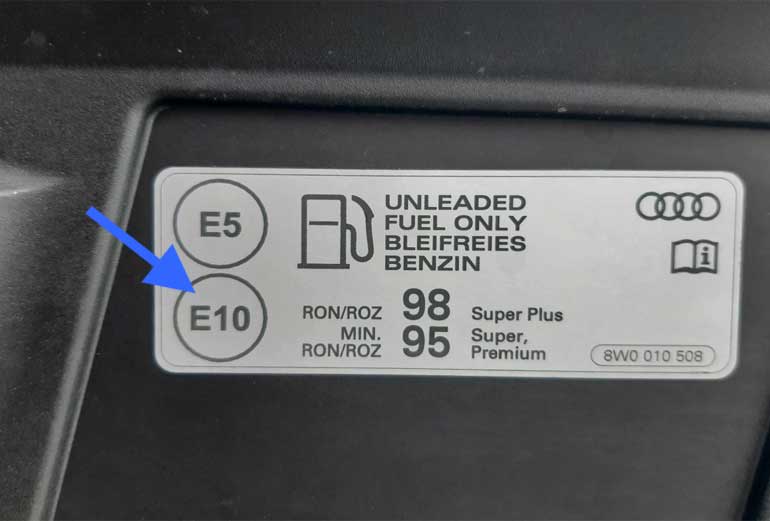
It is always worth checking the manufacturer's recommendations in the vehicle's manual. The vehicle documents or the fuel filler flap should display the characteristic E10 marking – confirming the car's compatibility with the new fuel.
If there are still doubts regarding compatibility, it is advisable to consult the vehicle manufacturer or a specialist workshop.
Can E10 fuel be used in LPG vehicles
For vehicles with LPG systems, it is often the case that the petrol tank is kept at a low level, and petrol is only used during engine start-up. A higher amount of bioethanol may pose potential difficulties in such cases. It is therefore advisable to consider filling up with E5 petrol with an octane rating of 98.
This approach will minimise the risk of corrosion of fuel system components and reduce the chances of contaminants precipitating, which could lead to fuel filter blockage.
Advantages of E10 petrol
E10 petrol is part of a broader strategy aimed at a sustainable fuel economy worldwide, taking into account important environmental, social and economic factors of our times.
- Ethanol, a component of E10, comes from plants that absorb carbon dioxide as they grow.
- Combustion of E10 fuel generates lower CO2 emissions compared to traditional petrol, helping to reduce the impact on climate change.
- The production of ethanol from plants such as corn or sugar cane can provide an additional source of income for farmers, supporting the agricultural sector.
- E10 and E5 fuels can be mixed in any proportion, and can be used alternately without negatively affecting the operation of the car.
- The increase in E10 petrol consumption compared to E5 is minimal. Tests have shown an increase in fuel consumption of about 1.5% when using E10 instead of E5, assuming a calm driving style.
Where to buy E10 fuel
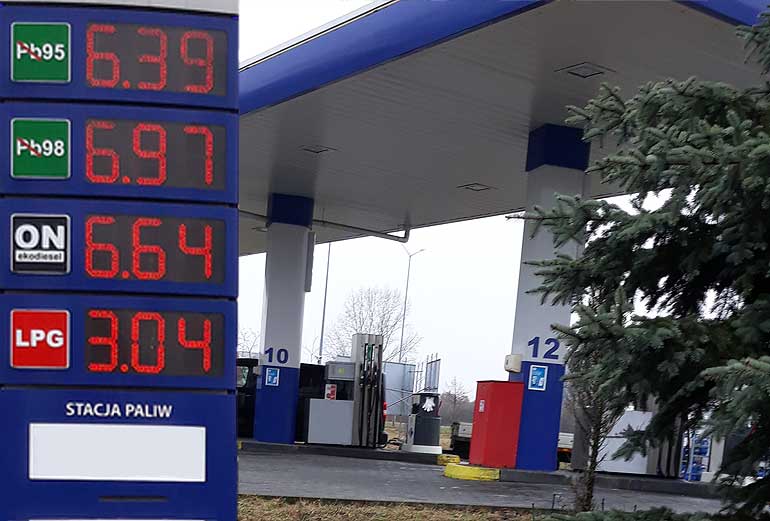
It is available at every petrol station in Poland. All stations now offer this fuel as standard 95-octane petrol.
The price of E10 fuel remains at a similar level to the previously offered PB95. The final price depends on the location of the petrol station where the car is refuelled.
The higher ethanol content affects the energy efficiency of E10 fuel. A slight decrease in performance of around 5% will generally be unnoticeable to the driver.
In which countries is E10 fuel available
In many places around the world, including the United States and Australia, E10 petrol is already widely available and promoted due to its environmental benefits and reduction of greenhouse gas emissions. Since 2016, it has been recognised as a reference fuel for testing new vehicles for performance and emissions.
Since 2009, E10 has been systematically introduced in Europe. It can already be purchased and used in Austria, Belgium, France, Germany, Hungary, Slovakia and the United Kingdom, among others. Poland is the 18th country in the EU to introduce E10.
Increasing the share of biofuels in transport fuels will enable Poland to achieve the EU target of 14% share of fuels from renewable sources in transport fuels and reduce dependence on fossil fuels.
MORE INFORMATION
The European Automobile Manufacturers' Association (ACEA) has prepared a report on the compatibility of various makes and models of cars with the use of E10 petrol.
RECOMMENDED OTHER ARTICLES ON SIMILAR TOPICS