Modern vehicle tracking is no longer limited to simply monitoring location on a map. More and more companies are choosing solutions that combine a GPS tracker with a camera recording the view in front of the vehicle.
This combination provides an entirely new level of control – not only do you know where the vehicle is, but you also see what is actually happening on the road.
In this article, we explain how such a solution works, when it is worth implementing, and what real benefits it brings to your business.
Topics covered:
What is a GPS tracker with a camera?
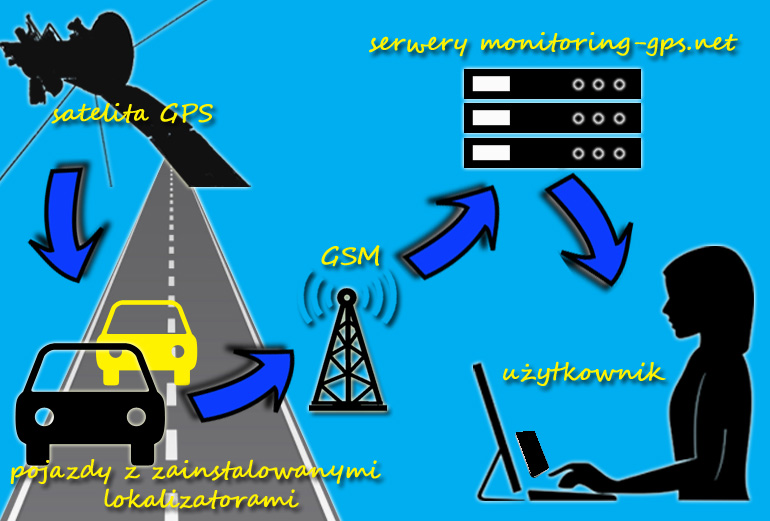
This is a device or set of devices that combine:
- a GPS module for vehicle location
- a camera recording the view in front of the vehicle, i.e. a dashcam
- often also a data recorder and SIM / LTE transmission module
In practice, this means the system:
- shows the vehicle's position on the map
- records the route taken
- records footage from the road
- enables access to recordings live or after an incident
This solution is particularly popular among transport, courier and sales fleets.
How does the camera work in a GPS system?
The camera installed in the vehicle operates either continuously or in event mode. The most common modes are:
Continuous recording
The camera records footage throughout the journey, overwriting the oldest recordings.Event recording
The system saves a segment of footage in the event of sudden braking, a collision, activation of the G-sensor overload detector, or abrupt manoeuvres.Online view
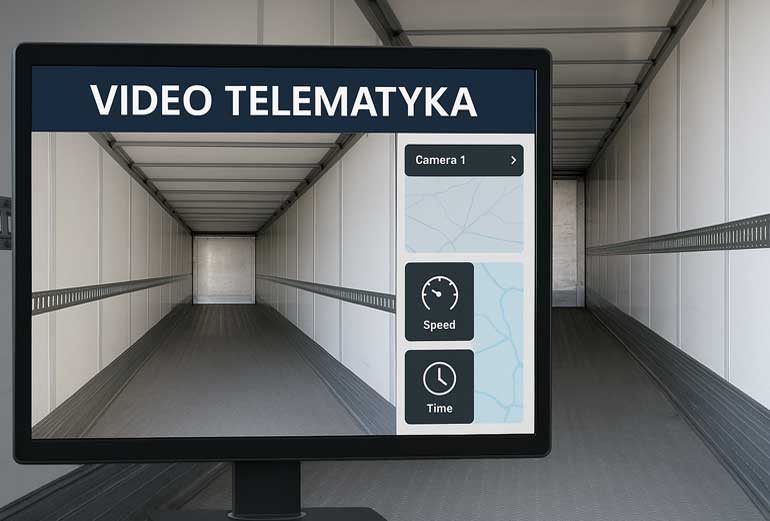
In selected systems, it is possible to access real-time footage via the Monitoring-GPS.net panel.
Thanks to integration with the GPS system, every recording is linked to the location, speed and time of the event.
Why is GPS location alone not enough?
Classic GPS tracking answers the question: where was the vehicle? The camera, on the other hand, answers: what exactly happened?
This is a crucial difference, especially in contentious situations such as:
- road collisions
- dangerous behaviour by other road users
- customer complaints
- inappropriate driver behaviour
Without footage, it is often difficult to clearly determine the course of events.
The most important applications of a GPS tracker with a camera
Protection against false claims
One of the main reasons for implementing cameras is to protect the company from unfounded accusations. Footage from the camera can clearly indicate the perpetrator of a collision, protect the company from compensation costs, and speed up the claims process.Improving driver behaviour
Awareness that driving is being recorded significantly influences driver behaviour. The results of implementation often include fewer abrupt manoeuvres, lower fuel consumption, and reduced risk of accidents.Service quality control
In sectors such as transport, delivery or field service, the camera allows you to verify the course of job execution, check driver behaviour towards the customer, and analyse problematic situations.Evidence in contentious situations
Footage from the camera can be crucial in disputes with customers, inspections by authorities, and insurance proceedings. It is a real safeguard for the company’s interests.
What features should a good system have?
Not every GPS tracker with a camera offers the same capabilities. It is worth paying attention to several key elements:
- Recording quality – Full HD is the minimum, as only then can you read details such as registration numbers.
- Viewing angle – a wide angle, e.g. 120-170 degrees, allows you to cover a larger area in front of the vehicle.
- GPS integration – the best systems link recordings with the route, speed, and journey history.
- Remote access – the ability to download footage without physically accessing the vehicle is a major time saver.
- Event detection – the system automatically marks recordings of collisions or dangerous situations.
GPS tracker with camera and GDPR – what do you need to remember?
Implementing cameras in vehicles comes with legal obligations. The most important rules:
- the driver must be informed about the monitoring
- recordings may only be used for a specified purpose
- data cannot be stored longer than necessary
- the system must be properly secured
It is worth preparing appropriate documentation and procedures to avoid issues during inspections.
Is this solution suitable for every company?
A camera is not always necessary, but in many cases it brings significant benefits. It is especially recommended for:
- domestic and international transport companies
- courier and delivery fleets
- leasing and vehicle rental companies
- businesses with a large number of drivers
The larger the fleet and the higher the risk of incidents, the more sense it makes to implement this solution.
GPS + camera = complete vehicle telematics
The combination of a GPS tracker and a camera is the first step towards more advanced systems, such as:
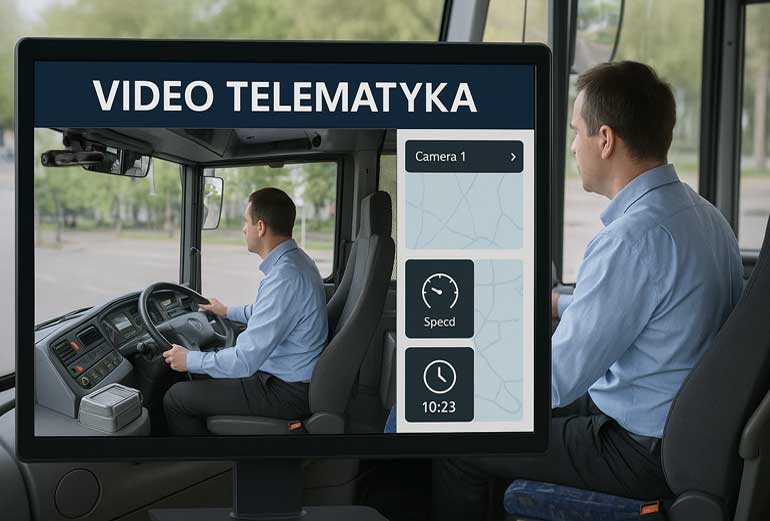
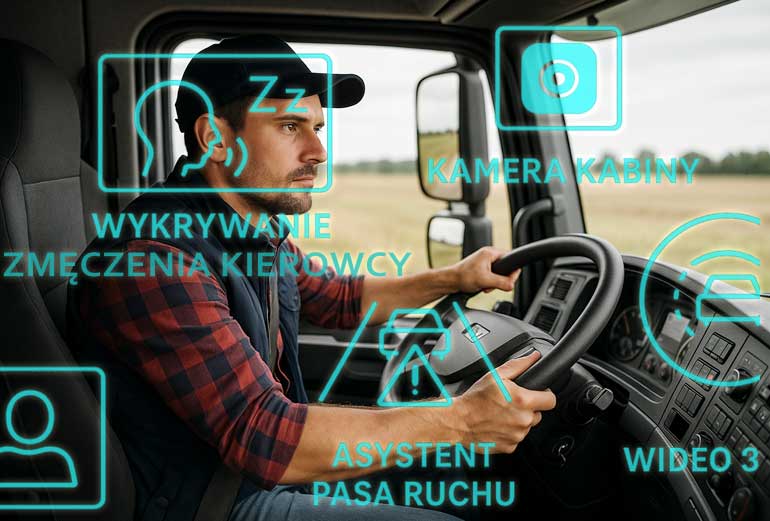
- video telematics
- driver behaviour analysis
- ADAS systems, i.e. driver assistance systems
- interior vehicle monitoring
This is the direction in which modern fleet management is developing.
Summary
A GPS tracker with a camera is a solution that significantly increases safety and control over vehicles. The main benefits:
- complete knowledge of routes and incidents on the road
- protection against false claims
- improved driver behaviour
- support in resolving disputes
- better fleet work organisation
In practice, this means not only greater safety but also real savings for the company.
RECOMMENDED OTHER ARTICLES ON SIMILAR TOPICS
How to implement GPS tracking in your company in compliance with GDPR