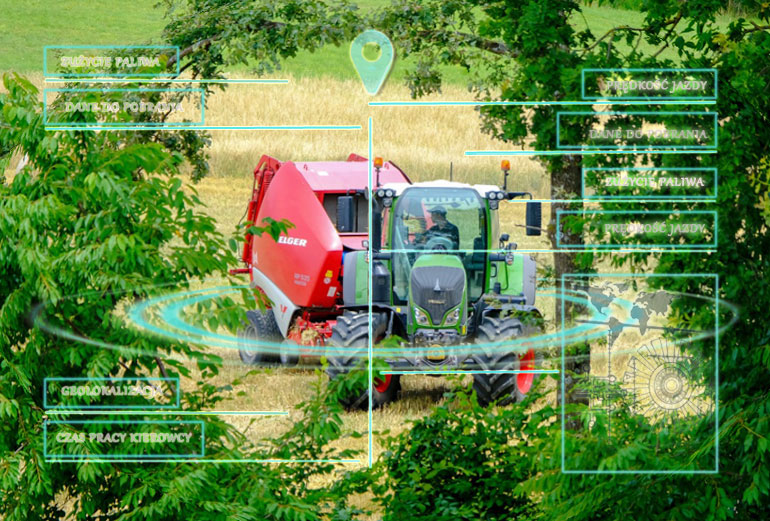
Telematics in agriculture, especially in the monitoring of agricultural machinery, offers numerous benefits. By utilising technologies such as GPS vehicle tracking (monitoring GPS pojazdów), sensors and data analysis, telematics enables precise monitoring of machines, optimal use of resources, as well as the collection of valuable information, improved work safety and increased agricultural productivity.
Telematics supports sustainable agriculture. It helps farmers make better decisions and contributes to more efficient management of agricultural holdings.
With such a wide range of applications, particularly in the monitoring of agricultural machinery, it provides extensive opportunities to use communication technologies such as GPS, sensors, wireless networks, etc., for remote monitoring and data collection concerning various aspects of agriculture.
Here are several ways in which telematics can be used in the monitoring of agricultural machinery:
One of the key advantages of GPS tracking is precision.
Thanks to this technology, farmers can accurately determine the location of their machines and monitor their movements in the field. This enables precise execution of fieldwork, such as ploughing, sowing or harvesting. Precise control of agricultural machinery translates into increased efficiency and minimisation of losses. Accurate monitoring of agricultural machinery using GPS systems is one of the key advantages of telematics.
This results in increased efficiency and minimisation of losses. The data obtained also allows for effective planning and monitoring of irrigation, fertilisation and the use of plant protection products, which enables optimal use of resources and cost reduction.
Another benefit of telematics in agriculture is data collection and analysis.
Using sensors and monitoring systems, farmers can gather information on soil moisture, temperature, fertilisation levels and other important parameters. Based on in-depth data analysis, farmers can make more informed decisions in managing their resources. The collected information can be used to adjust cultivation strategies, optimise the amount of plant protection products used, and manage fields appropriately to achieve maximum yields.
Telematics in agriculture also contributes to improved work safety.
Thanks to GPS tracking and machine tracking systems, farmers can monitor the location of machinery and oversee their operation. In the event of a breakdown or accident, farmers can quickly locate the affected machines and provide immediate assistance. Furthermore, in the case of theft, GPS technology makes it easier to recover stolen machines, thereby increasing the security of agricultural assets. There are also cases of fuel theft from machines; however, GPS tracking systems can effectively detect such unwanted fuel losses.
Telematics also supports sustainable agriculture.
Through precise control and optimal use of resources, farmers can achieve higher yields with minimal labour and costs. Optimal use of water, fertilisers and plant protection products helps reduce the negative impact on the environment.
Why invest in a GPS tracking system.
Regardless of the size of the farm, monitoring agricultural machinery using a GPS system brings numerous financial benefits. Comprehensive solutions allow for ongoing vehicle control, employee work time monitoring, and verification of work within a designated geofence.
It is worth noting that advanced control of machines and employees helps reduce operating costs, increase their efficiency, and contributes to reducing the risk of fraud.