
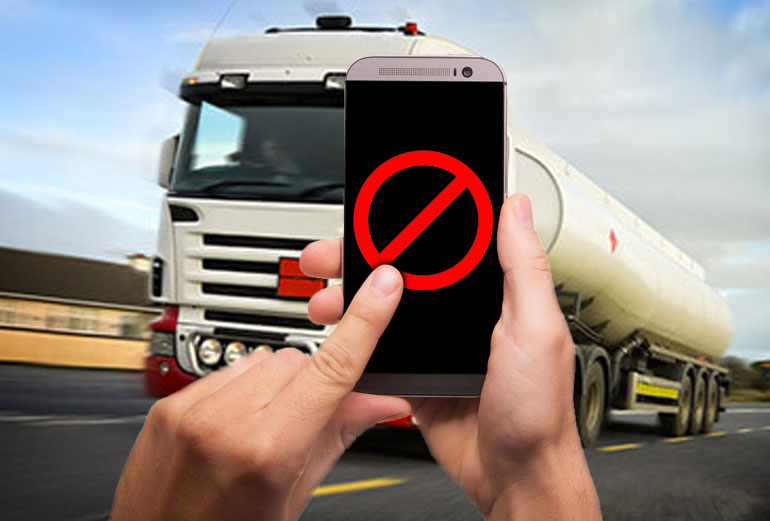
We are eager to take advantage of the benefits of modern technology. We know the advantages of GPS, and both companies and private individuals successfully use such solutions. Thanks to GPS, fleet administrators and operators can increase work efficiency and effectiveness. A wealth of information becomes available "instantly". However, we often do not realise the problems that may arise when using GPS. Some are common, others rare, but all can affect any device’s ability to obtain accurate data. It is worth being aware of them...
The main task of GPS is to determine location based on signal measurements, and when something fails, problems with accurate vehicle tracking arise. For fleet monitoring systems, it becomes impossible to locate vehicles on the map. In the case of a lack of signal on a smartphone or in a car navigation system, route planning becomes complicated. So, what should you know to be prepared for possible scenarios of GPS signal loss?
- Too few satellites.
When receiving data from fewer than 4 satellites, many GPS receivers struggle to accurately estimate location and report a “GPS signal lost” at points along the route. - GPS has been inactive in the background for too long.
It needs to download data from satellites describing the position and time of all satellites in the system. Correction may take up to five minutes or more. - Sudden position errors.
When signals from GPS satellites or mobile phone towers are reflected off buildings, the GPS receiver may be confused by the extra time it takes for the signal to arrive. In such situations, GPS data is less accurate. - Poor hardware may be to blame.
If the device is older or lacks good GPS reception features, it will have difficulty receiving signals from the satellite or mobile phone tower. - Update.
If the software is not updated, the GPS hardware may work correctly, but the software in use is faulty. - GPS does not work because the device has suffered mechanical damage, e.g. from a fall or water ingress.
In such cases, it is best to use a professional service to repair the fault. Sometimes it is necessary to replace the damaged module. - GPS signal interference in the car.
It is worth checking whether the device works properly after removing it from the vehicle. - Low battery level in GPS devices.
This can affect the correct operation of GPS on any device. - Lack of a suitable mounting location for the geolocation module.
Try changing the position of the device in the car. Ideally, it should be placed as low as possible with a direct view of the windscreen. However, note that if the car has heat-absorbing glass, the GPS antenna should be mounted elsewhere, as it may be difficult for the GPS signal to pass through. A heated windscreen can also be problematic. The thin metal wires responsible for distributing heat may interfere with signal transmission. The article contains tips on how to correctly install a tracker.
So, if your GPS device is not working, it is worth first trying to eliminate the above causes.
If you still do not know what is happening with the equipment, it is advisable to use a service centre. Professional GPS repair or replacement may be necessary.
Of course, you should always remember to choose high-quality equipment. Our devices are based on proven and stable components. They are minimally susceptible to any failures.
Reliable and professional GPS devices have sufficiently strong range that minor interference, such as that caused by heated windscreen elements in a car, cannot affect their operation.
Moreover, they are equipped with systems that notify you of attempts to interfere with the GPS signal in the vehicle. Thanks to these, theft and abuse can be effectively prevented. So, if a dishonest employee or thief uses a so-called jammer, the owner will receive an appropriate notification.
The devices we offer also have the ability to remotely block the ignition or activate the alarm siren upon detection of a jammer. With this solution, the problem usually disappears. However, remember that jammers, due to their short range, only work when placed close to the GPS device.
To ensure that GPS signal loss is no longer a problem, you should know how to prevent such situations and always respond to them appropriately.